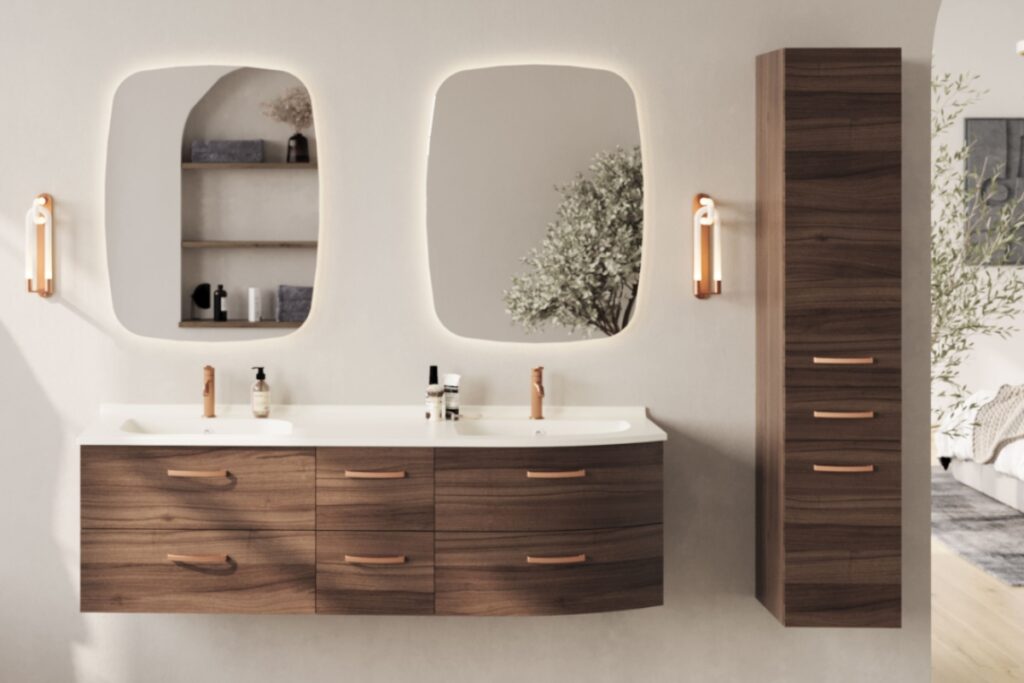
Why Natural Bathroom Ideas Are Trending
Think of the bathroom as more than just a practical space for getting ready in the morning; it can also provide somewhere to relax and enjoy a quieter moment away from the busyness of everyday life. This has helped increase interest in natural bathroom ideas over time, with earthy colours, organic shapes and sensory finishes creating a soft and welcoming atmosphere.
So, whether you are planning a complete renovation or just making a few small changes, a nature inspired bathroom design offers plenty of possibilities. From warm wood effect furniture to simplistic muted green shades and textured tiles, there are many ways to introduce this natural style while keeping your bathroom practical for everyday use.
What Are Natural Bathroom Ideas?

Natural bathroom ideas and designs take inspiration from the colours, textures and shapes found in the natural outdoors. These can be such as; warm timber tones, stone inspired surfaces, leafy greens and soft neutrals as they are all common features that help to create a space that feels balanced and comfortable for all.
Natural styling does not mean that every surface must be made from materials found in nature of course. By using wood effect furniture, stone effect porcelain tiles and even simple ceramic accessories can all recreate the look while offering practical options for a room highly exposed to moisture.
Texture also plays an important role. Utilising matt cabinetry, textured tiles, timber finishes and natural stone can add warmth as well as visual interest without making the room feel too busy and overwhelming. And adding organic shapes, such as rounded mirrors and curved basins, can help soften the straight lines that are often found in contemporary bathrooms.
Also make sure to think about including plants and natural daylight as they can further strengthen the connection people have with the outdoors. However, the style does not depend on having large windows or plenty of floor space. Thoughtful colour choices and a few carefully selected finishes can work just as well in a compact ensuite as in a spacious family bathroom.
Why Natural Bathrooms Are Trending
Many homeowners want their interiors to feel comfortable and relaxing, making nature inspired design an attractive choice. As bathrooms with gentle colours, natural textures and considered lighting can create a welcome sense of calm within a home.
This is closely linked to the also high appeal of a spa inspired bathroom. Rather than relying on complex decoration, this look often uses a more restrained colour palette, tactile materials and simple accessories to create a peaceful atmosphere. Soft lighting and uncluttered surfaces can also contribute to the natural effect without requiring a complete change to the room.
Natural interiors can also offer flexibility as some people prefer pale wood finishes and creamy whites for a bright, understated look. While others may favour a deeper green with warm browns and contrasting stone textures. Both approaches can work well of course, provided the colours and materials complement one another.
Practicality is another consideration to keep in mind as bathrooms need to cope with moisture, regular cleaning and daily use, so the appearance is only one part of the decision. Choosing suitable finishes as well as useful storage and materials that are easy and straightforward to maintain, can help create a space that remains attractive and functional over time.
Popular Natural Bathroom Materials

The materials used throughout a bathroom have a significant influence on its overall appearance. By combining a small number of complementary finishes, this can create depth and interest without overwhelming the space.
Wood and wood effect finishes introduce warmth and help soften the appearance of hard bathroom surfaces. They can be used on vanity units, shelving and accessories, with lighter oak tones creating an airy feel and deeper wood shades adding deep contrasts. Wood effect finishes are also worth considering in areas exposed to moisture, although their suitability will depend on the specific product and its care requirements. Looking at different bathroom vanity unit styles can also help illustrate how furniture finishes influence the overall look of a bathroom.
Then there are stone and stone effect surfaces. These can bring subtle patterns and variations in tone to walls, floors and worktops. Natural stone can create a distinctive finish, while porcelain tiles with a stone effect offer another option for achieving a similar appearance. When choosing any surface, make sure to consider its water resistance, cleaning requirements and suitability for the intended location.
Going onto textured tiles, these can add another layer of interest. Matt finishes, gentle tonal variations and tactile surfaces can prevent neutral bathrooms from feeling flat with no personality. Using a textured finish on one wall or around the shower can introduce detail without covering every surface in overwhelming pattern.
Finally, glass, ceramics and greenery help to balance these materials. Glass shower screens allow light to pass through the room, while ceramic basins provide a smooth contrast to textured finishes. Plants can add a fresh touch, provided they suit the available light, humidity and ventilation.
The most effective combinations usually include a mixture of smooth and textured surfaces, with enough consistency in colour to keep the overall design feeling connected.
Natural Bathroom Colour Ideas
Colour is one of the simplest ways to introduce nature inspired styling. Using the right palette can make a bathroom feel warmer, brighter or more grounded, depending on the shades and finishes you choose.
Earthy bathroom colours, that include beige, cream, taupe and warm white, can provide a versatile starting point. These shades work well with wood effect furniture and stone inspired surfaces, creating a soft backdrop for other details. Lighter colours can also help a smaller bathroom feel more open and spacious, particularly when combined with good lighting and reflective surfaces.
Green bathrooms are another popular option. Sage offers a subtle, muted finish, whereas olive introduces a little more depth to the area. Green can feature on walls, cabinetry or accessories, allowing you to introduce colour without making it dominate the room.
Soft browns and stone greys provide further possibilities. As brown tones complement timber finishes, while warmer greys can create a contemporary look without feeling too stark. Make sure to pay attention to the undertones when combining colours, as some greys appear cooler beside warm wood, while others have beige or brown notes that create a more cohesive colour scheme.
For a balanced result, begin with two or three complementary shades. Light walls can sit alongside darker furniture, textured tiles or restrained metallic details. It is also worth considering which direction your bathroom faces, as this can influence how colours appear throughout the day.
For example, south facing bathrooms often receive plenty of natural light, which can make colours appear brighter and warmer. The light may feel more neutral around midday and take on a softer, golden quality later in the afternoon, depending on the season and weather of course. And comparing colour samples in your own bathroom at different times of day can help you see how each shade looks under changing light conditions. Make sure to look into different bathroom colour and finish options to see how shades and surface textures can be combined.
How to Create a Natural Bathroom

You do not necessarily need to replace every fixture to introduce a natural style. A few considered updates can make a noticeable difference, particularly when the colours and materials all work together.
So, to summarise, start by choosing a simple palette of two or three complementary shades, nothing overwhelming. If your existing tiles are neutral, you might introduce warmer accessories, green accents or a wood effect finish rather than changing the entire room. By keeping the palette consistent will help the space feel coordinated.
Next, consider which materials suit your bathroom and how much maintenance you are comfortable with. Porcelain tiles and suitable wood effect furniture can provide a nature inspired appearance while meeting the practical needs of the bathroom. Always check product guidance for moisture resistance, cleaning and installation before making a final decision.
Finishing touches can introduce natural character without taking up much space. Choose plants that suit your bathroom’s conditions, use woven accessories in areas where they can stay dry and keep everyday items organised and tidy. Too many decorative objects can make surfaces feel cluttered, so a few carefully selected pieces are often enough.
Finally, think about functionality alongside appearance. Storage, ventilation, lighting and layout all influence how well a bathroom works. Wall mounted furniture can help reveal more floor space in a compact room, while layered lighting can make a larger bathroom feel more comfortable. Considering different modular bathroom furniture designs can provide examples of how storage and layout can be planned around the space available.
The best approach is to choose features that suit your available space, daily routines and cleaning preferences, rather than following every trend.
Natural bathroom ideas offer a versatile way to create a space that feels calm, welcoming and suited to everyday life. From earthy colours and warm wood finishes to textured surfaces and organic details, small changes can make a noticeable difference to the overall look and feel of your bathroom.
If you are considering new colours for your space, you can order bathroom colour samples to see how different shades and finishes look in your own home. You can also find your nearest bathroom showroom to view colours and materials in person before making your final choices.
If you are a bathroom retailer looking to expand your offering, discover the benefits of working with Ambiance Bain and find out more about becoming a retailer.