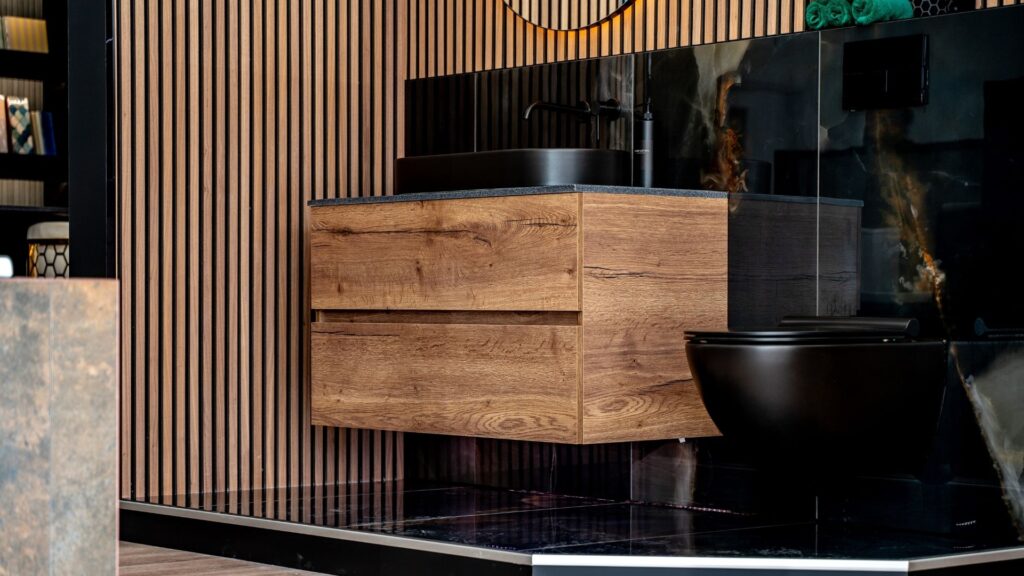
How to Match Your Bathroom Mirror to Your Vanity Unit
A bathroom mirror and vanity unit are often two of the most prominent features within a bathroom, so choosing them together can help create a more considered and cohesive interior. While they do not need to match exactly, the right combination of proportions, shapes and finishes can bring the entire scheme together.
When it comes down to the size of your bathroom mirror, its frame, finish and lighting, there are several details that you need to consider before making your choice. Whether your bathroom has a contemporary, classic or more transitional aesthetic, these practical tips can help you find a mirror that complements your vanity unit beautifully.
Why Your Bathroom Mirror and Vanity Unit Should Work Together

Your vanity unit and mirror naturally draw the eye, more so when positioned together above the basin. By choosing pieces that complement one another, this can create a sense of balance, while also helping the bathroom feel more cohesive.
That being said, proportion is an important place to start. A very small mirror above a large vanity may feel visually disconnected, while an oversized design may overwhelm a more compact unit. However, this does not mean the mirror needs to be exactly the same width or finish as the vanity. In fact, introducing a little contrast can create a more interesting and individual look.
Try to consider how the mirror relates to the vanity, basin, wall space, lighting and other finishes throughout the room.
Consider the Size and Proportions of Your Bathroom Mirror
Matching Mirror Width to Your Vanity Unit
The width of the mirror you choose can have a significant effect on how the vanity area looks. A mirror that is the same width as the vanity can create a neat, symmetrical appearance, while a slightly narrower mirror can give the area a lighter feel.
If you’re looking for a more generous look, a wider mirror can extend beyond the edges of the vanity, particularly in larger bathrooms where there is plenty of surrounding wall space. However, it is important to consider nearby fittings, wall lights and the position of the basin before choosing a larger design.
Make sure to always measure the available wall space carefully rather than relying solely on the dimensions of the vanity unit. As this will help you understand how much room you have for the mirror and any surrounding features.
Choosing the Right Height
The height of your mirror is just as important as its width. A taller design can draw the eye upwards and work particularly well in bathrooms with high ceilings, while a shorter mirror may be more suitable where wall space is limited.
Think about the height of your vanity unit and where the mirror will sit above it. You will also need to consider who will be using the bathroom, ensuring everyone can comfortably see themselves without the mirror being positioned too high or too low.
Taking the practicality into consideration can help you achieve a bathroom mirror that looks right while remaining comfortable to use every day.
How to Match Mirror Shapes With Different Vanity Styles

Choosing the Right Shape for Modern Vanity Units
Clean lines and simple silhouettes often work beautifully with contemporary vanity units. A rectangular or square mirror can reinforce this structured aesthetic and can create a streamlined appearance across the wall.
Alternatively, you could consider introducing a rounded or arched mirror to soften angular furniture. This contrast can add visual interest without disrupting a minimalist design. Frameless mirrors can also work particularly well in modern bathrooms where a pared back appearance is preferred.
Mirror Styles That Complement Traditional Designs
Traditional vanity units can provide an opportunity to introduce more decorative mirror styles into your bathroom. A framed design can complement classic furniture details, particularly when its finish relates to other elements within the bathroom.
However, rounded and softer shapes can also sit beautifully alongside traditional styling, while decorative framing can add another layer of character. Consider the architectural details already present in the bathroom, such as panelling, cornicing or period features, and choose a mirror that feels connected to these elements.
Coordinating Colours, Frames and Finishes
Complementary Material Choices
The materials and finishes used around your vanity area can influence which mirror feels most at home. For example, a timber framed mirror could complement a vanity with natural wood detailing, while metallic or painted frames can introduce a different dimension to the scheme.
Remember you do not necessarily need to use identical materials throughout the bathroom as contrasting finishes can work beautifully when they share complementary tones. The key is to consider the overall combination rather than choosing each element in isolation.
But using too many unrelated finishes can make a bathroom feel visually busy, so consider how your mirror, vanity, worktop, tiles and other furniture will work together.
Matching Fixtures and Hardware
Your mirror can also be used to connect the vanity with the bathroom’s other hardware. For example, a black framed mirror can echo black taps and handles, while brass detailing can complement brass shower fittings and accessories.
Finishes such as chrome, brass, black and nickel can all create very different effects. Matching every finish is not essential, however. Repeating selected finishes throughout the room is often enough to create visual consistency without making the design feel overly uniform.
Choosing Between Illuminated and Non-Illuminated Mirrors

The Benefits of Illuminated Mirrors
An illuminated bathroom mirror combines practical lighting with a sleek contemporary appearance. Integrated lighting can provide useful illumination around the face, making everyday tasks such as shaving or applying make-up easier.
Depending on the design, additional features may include different lighting settings, demisting functions and touch controls. These can be particularly useful in a busy bathroom.
It is still worth considering how the mirror lighting works alongside the rest of your lighting plans. The aim should be to create a comfortable and well-balanced level of illumination throughout the room.
When a Non-Illuminated Mirror Is the Better Choice
A non-illuminated mirror can be a particularly elegant option when the mirror itself is intended to act as a decorative feature. This can work beautifully with traditional vanity units or bathrooms where an ornate frame is an important part of the design.
Separate wall lights, ceiling lights or other sources can provide the illumination required around the vanity area. This gives you greater freedom to choose a mirror based primarily on its shape, frame and overall aesthetic.
Bathroom Mirror Ideas for Modern and Traditional Spaces
For a contemporary bathroom, consider pairing a clean lined vanity with a frameless rectangular mirror for a minimalist appearance. Alternatively, a curved or arched mirror can soften a modern unit and introduce a more sculptural element.
In a traditional bathroom, a framed mirror with a softer shape can complement a classic vanity beautifully. Consider finishes that echo the furniture or hardware, while allowing enough contrast to keep the scheme interesting.
For a more transitional interior, there is plenty of freedom to combine modern and traditional elements. A simple vanity could be paired with a decorative mirror, or classic furniture could be balanced with a sleek illuminated design.
The vanity unit is a useful starting point. Once you have established its style, colour and proportions, look for a mirror that complements those features while contributing something of its own.
Common Mistakes to Avoid When Matching a Bathroom Mirror and Vanity Unit

One of the most common mistakes is choosing a mirror without considering its proportions. Always check the available wall space, vanity dimensions and surrounding fittings before purchasing.
It is also worth avoiding too many competing colours, materials and finishes. A bathroom can incorporate different textures and tones successfully, but there should still be a clear connection between the main elements.
Practicality should not be overlooked either. Consider whether the mirror provides enough illumination, whether it will be easy to clean and whether its features suit the way the bathroom will be used.
Finally, check all measurements and installation requirements carefully. Making sure the mirror is suitable for its intended position can prevent issues once your bathroom installation is underway.
Find the Right Bathroom Mirror for Your Vanity Unit
Choosing a bathroom mirror to complement your vanity unit is about more than simply finding two products that look good individually. Proportion, shape, colour, materials and lighting all contribute to how the finished space feels.
Start with the style and dimensions of your vanity, then consider how the mirror can complement or contrast with it. Think about the wider bathroom too, including your tiles, taps, lighting and other finishes. Most importantly, balance appearance with practicality so your chosen mirror looks beautiful while working comfortably within your everyday routine.
If you’re looking for inspiration for your bathroom design, find a showroom to explore Ambiance Bain’s collection in person and discover combinations that could work within your space. Or feel free to contact us and discuss your requirements and find out more about creating a bathroom that brings your chosen furniture and finishing touches together.